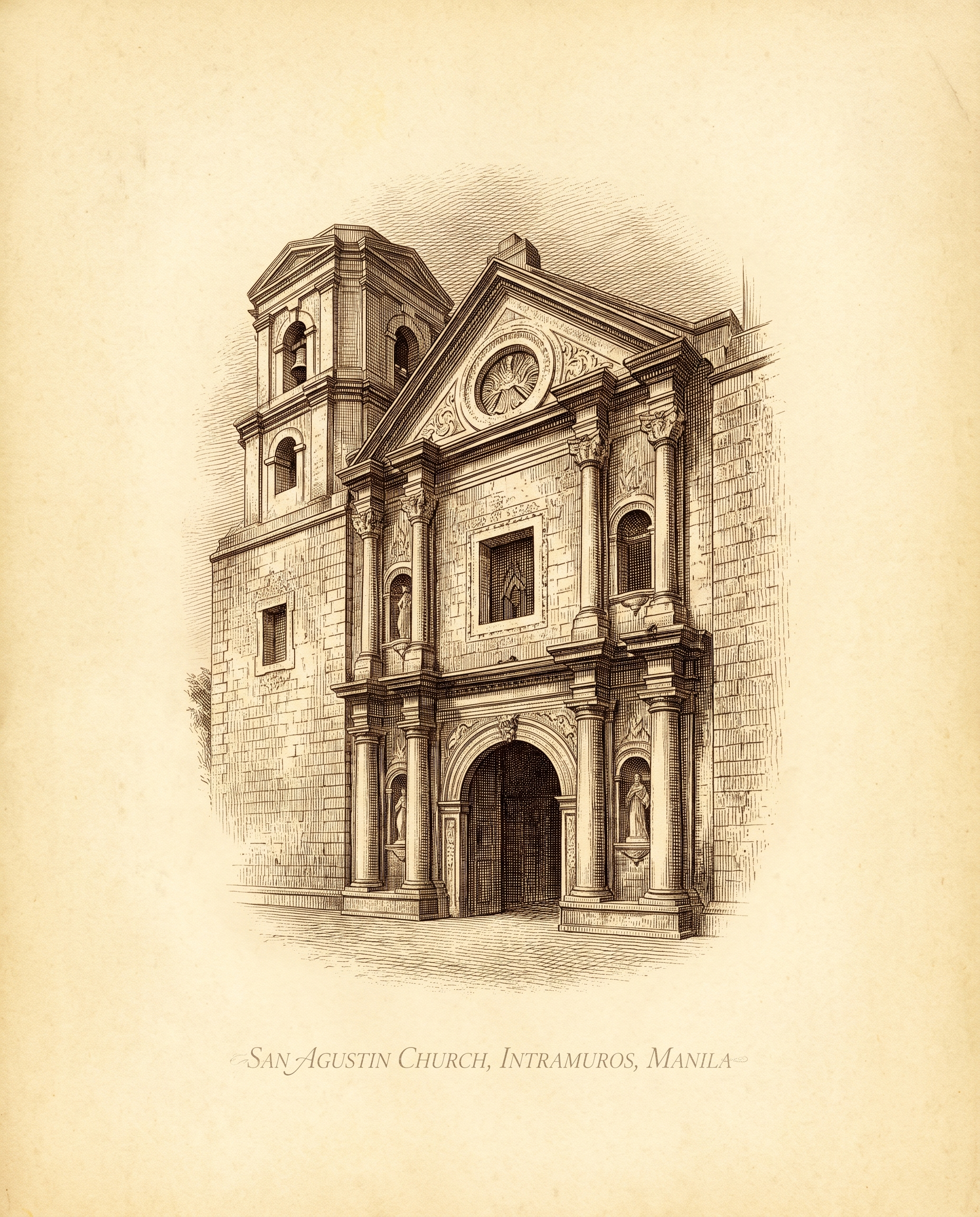
San Agustin Church
General Luna Street, Intramuros
Manila, 1002 Metro Manila, Philippines
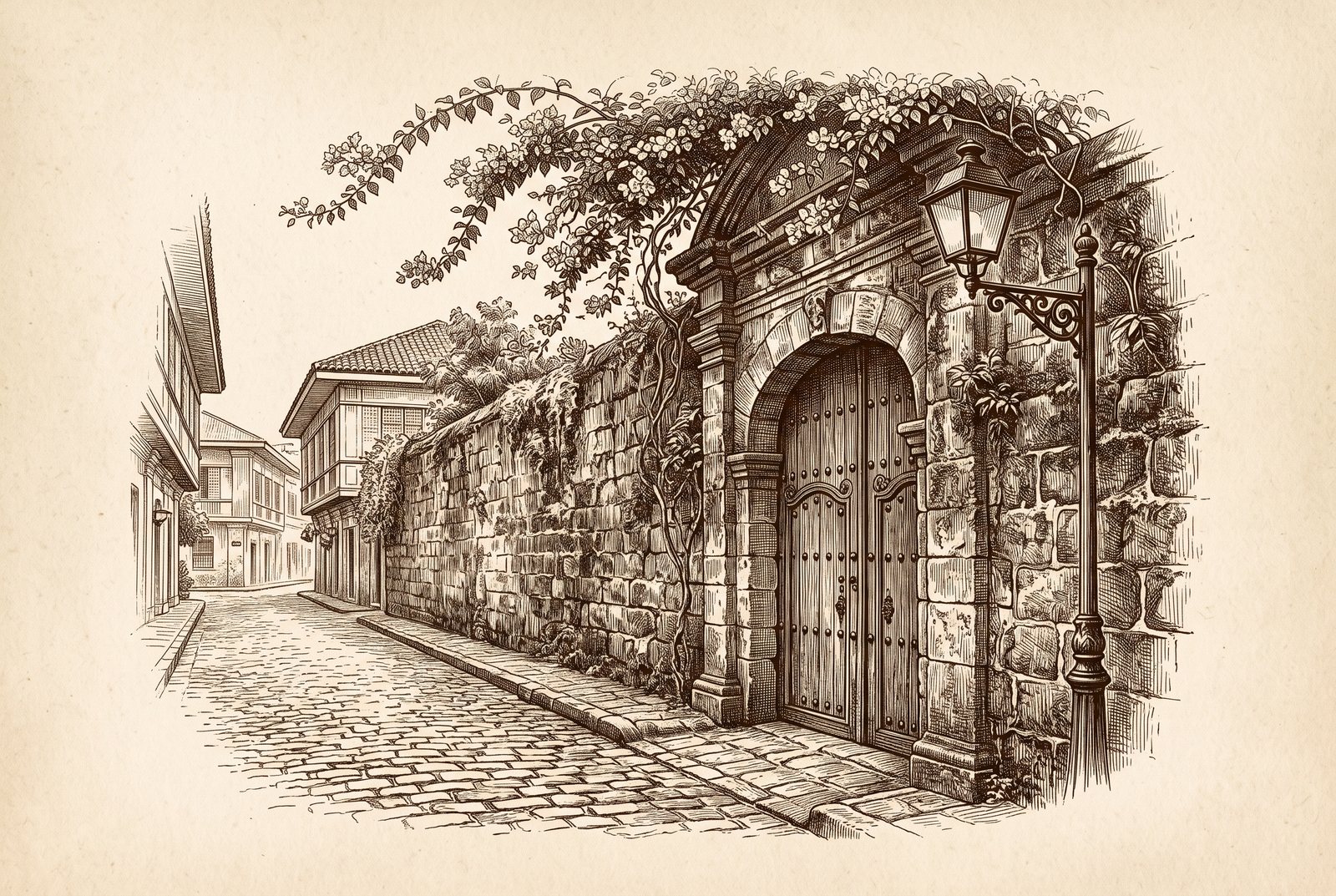
Please arrive by 3:30pm, half an hour before the ceremony begins. Intramuros keeps its old cobblestones and uneven stone paving, low, sturdy heels or flats are a kinder choice than anything thin or spiked.
Parking in Intramuros is difficult. We are working to organise a parking lot for our guests and will share the details here once it is confirmed. Until then, a Grab or a taxi to the church door is the easiest way to arrive.
A holding area is set aside for our godparents and our elderly guests, so they can sit and wait out of the sun. Everyone else is welcome to wait at the shops across the street, just beyond the parking lot, or at any of the cooler spots around the church while the ceremony gets ready to begin.
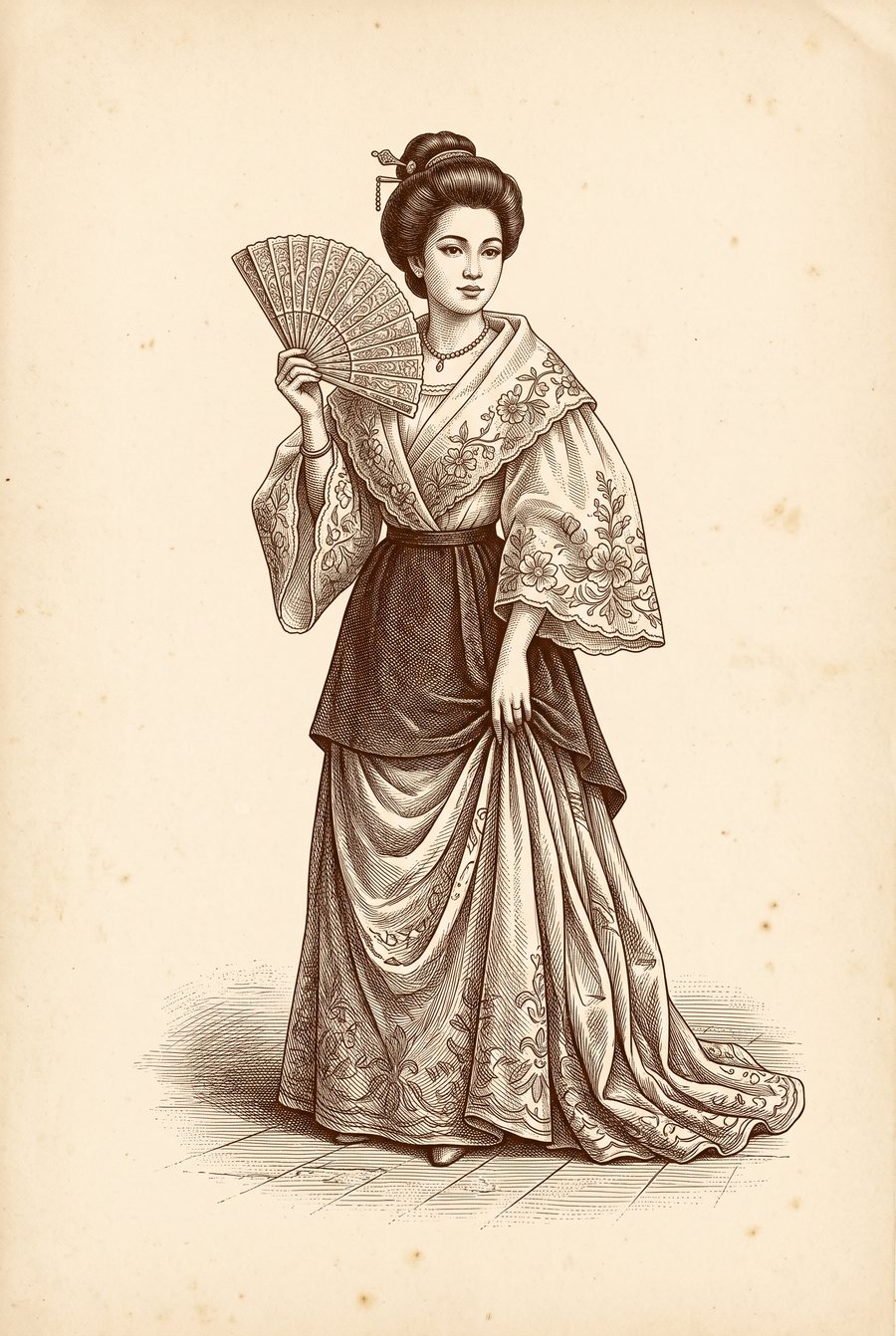
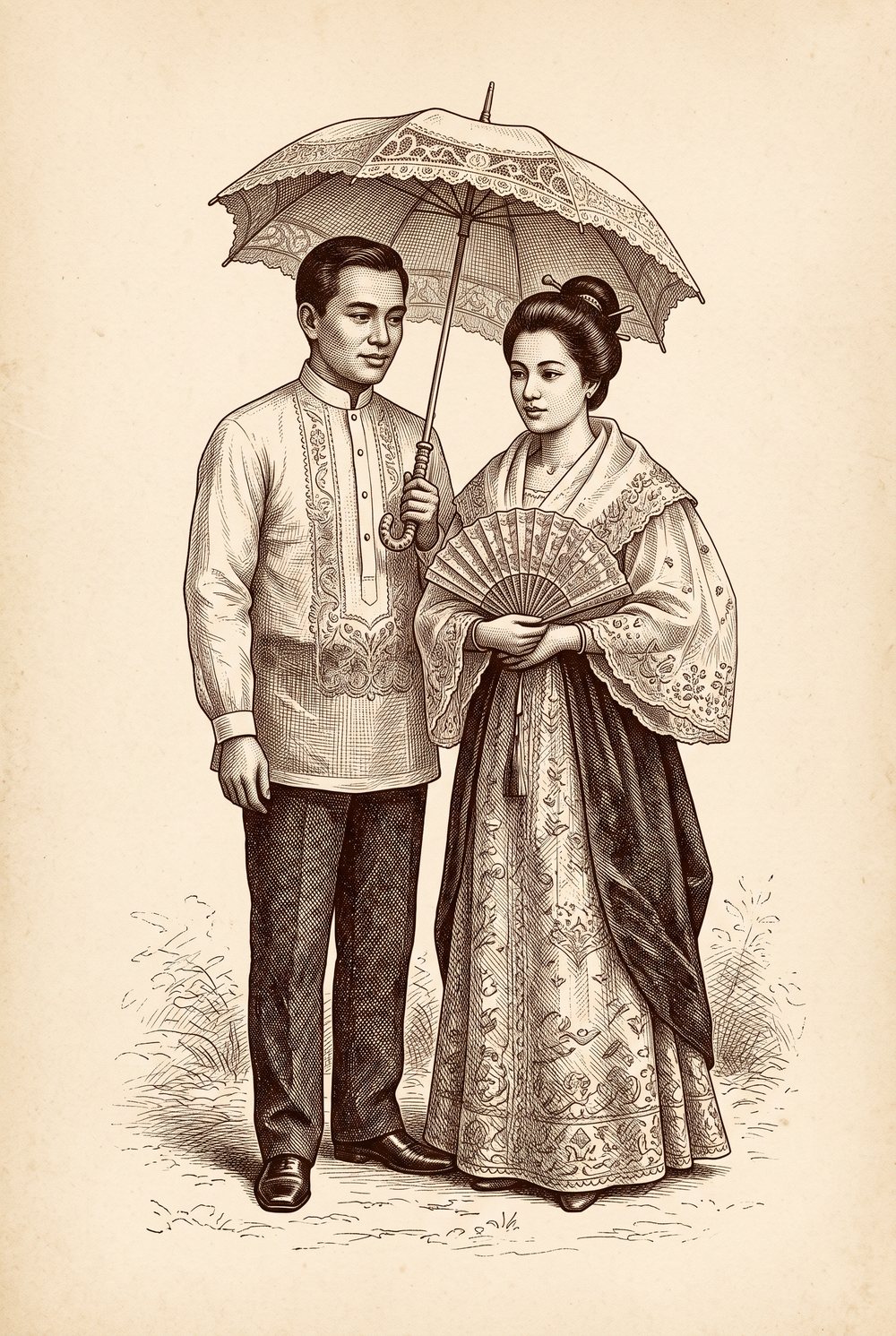
April is peak summer in Manila, and forecasters expect a very strong El Niño through to early next year. A normal April afternoon is around 34 degrees Celsius. In a hot year it can reach the high 30s, and with the humidity it will feel well past 40. Please be prepared for the heat.
To the Aussies in the crowd, we know. 34 degrees sounds like a mild Tuesday in a Perth summer, and you are already planning to laugh at the locals. Don’t. The number is a decoy. The humidity is the real opponent, and nothing prepares you for it. Your hair will give up first, then your shirt, then your dignity.
San Agustin Church is generally cool thanks to its adobe block construction, but it is not air conditioned. There are plenty of fans inside, and water will be provided.
Please be aware of the heat. Dress light, bring a hand fan or a small umbrella, and keep to the shade while you wait.

Our godparents
These are the people we asked to stand with us at the altar. They have the holding area at the church for the wait beforehand.
San Agustin traces back to 1571, when the Augustinian friars raised a first church of bamboo and nipa on this ground, twice rebuilt in wood and twice lost to fire. The stone church standing today was begun in 1586 under the architect Juan Macias and finished by 1607, making it the oldest stone church in the Philippines, largely unchanged since it was built.
It is the only structure in Intramuros to survive the bombing of Manila in 1945, and in 1993 it was inscribed on the UNESCO World Heritage List as one of the four Baroque Churches of the Philippines. Inside, a trompe l’oeil ceiling, carved wooden doors, and a High Baroque retablo remain much as they were, and the church still carries its parish name, Immaculate Conception Parish, and its older title, the Archdiocesan Shrine of Our Lady of Consolacion y Correa.
San Agustin sits inside Intramuros, the walled city the Spanish founded in 1571, governing Manila from within these walls until 1898. Six metre high walls once enclosed about 160 acres in a rough pentagon, moated on the landward side, entered through seven gates, and packed inside with churches, government houses, schools, and the homes of the old Spanish elite.
Most of Intramuros was destroyed in 1945, San Agustin among the very few buildings left standing. What has been rebuilt since, Fort Santiago, Casa Manila, the walls themselves, sits an easy walk from the church. Save it for another day of your trip, not the day of the wedding.
The Real History Behind Manila’s Walled City, by Standart. The history behind the walls, in a few minutes.